ABOUT / LAVINIUM
After the software arrives.
There is a particular hour in an institution. The laptop has closed. The licence is real. The floor has already gone back to what it trusts — a clipboard, an inbox, a person who remembers the exception. That hour is where the work lives.
8 min read
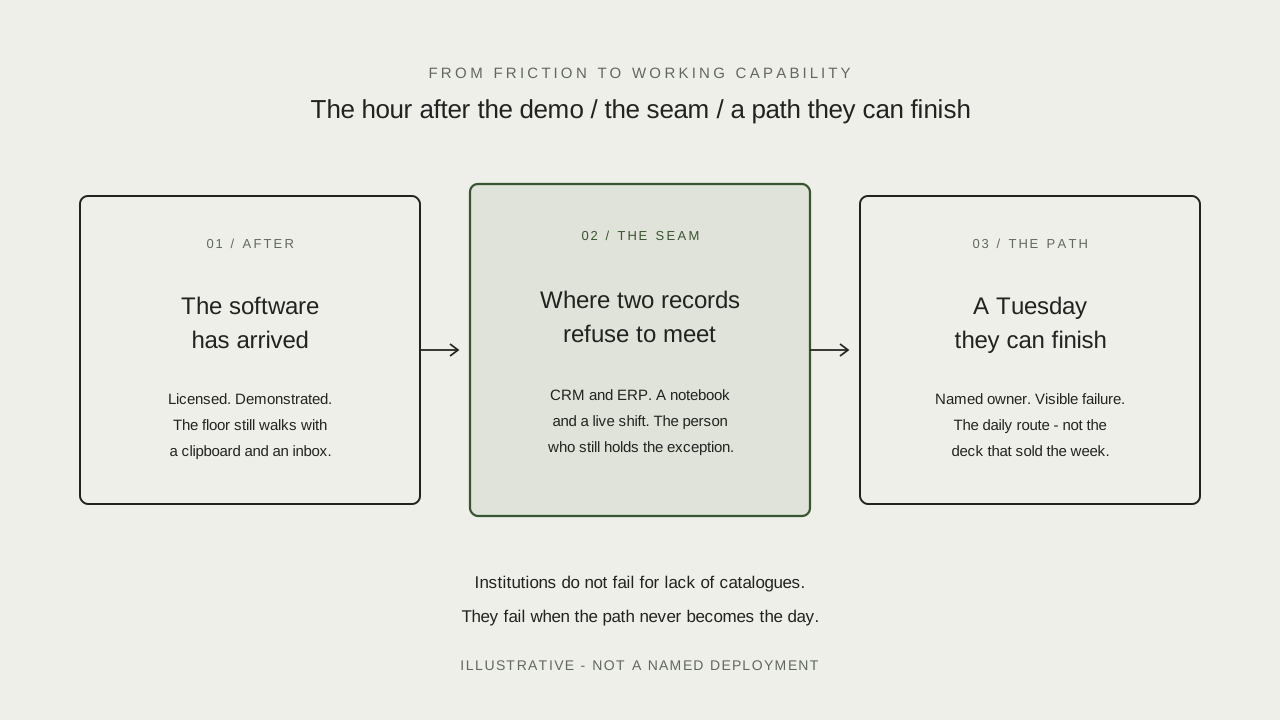
The hour after.
Institutions do not fail for lack of software. They fail in the quiet that follows it. A customer exists twice — once in the CRM, once in the ERP — and neither record will yield. An AI proof of concept still opens as a notebook. Operations move through a thread of email that only one dispatcher can read to the end.
The visit was serious. The platform was paid for. The path into the day was not. A plant can own a status view and still walk the line. A warehouse can run three systems of record and trust none of them at 6 a.m. A model can summarise beautifully on selected pages and go silent when the source is stale, or the reviewer has a shift to finish.
This is not a shortage of tools. It is a deployment problem wearing a product costume. The catalogue keeps growing. The seam — the place two systems, two teams, two versions of the same fact refuse to meet — stays staffed by whoever happened to be standing there.
What they run on.
We build what institutions run on.
Not the week of the demo. The Tuesday after, under access rules, in a change window, with a named owner who can pause the path and explain it. Inside the teams that already hold the operation. Across the systems they cannot stop. Built for the moment something must move and the exception is already walking toward the desk.
Forward deployed engineering is the name the industry found for this proximity. We do not treat the name as origin theatre. We treat it as a discipline of attention: close enough to see why the demonstration died, technical enough to write the missing connection, restrained enough to leave.
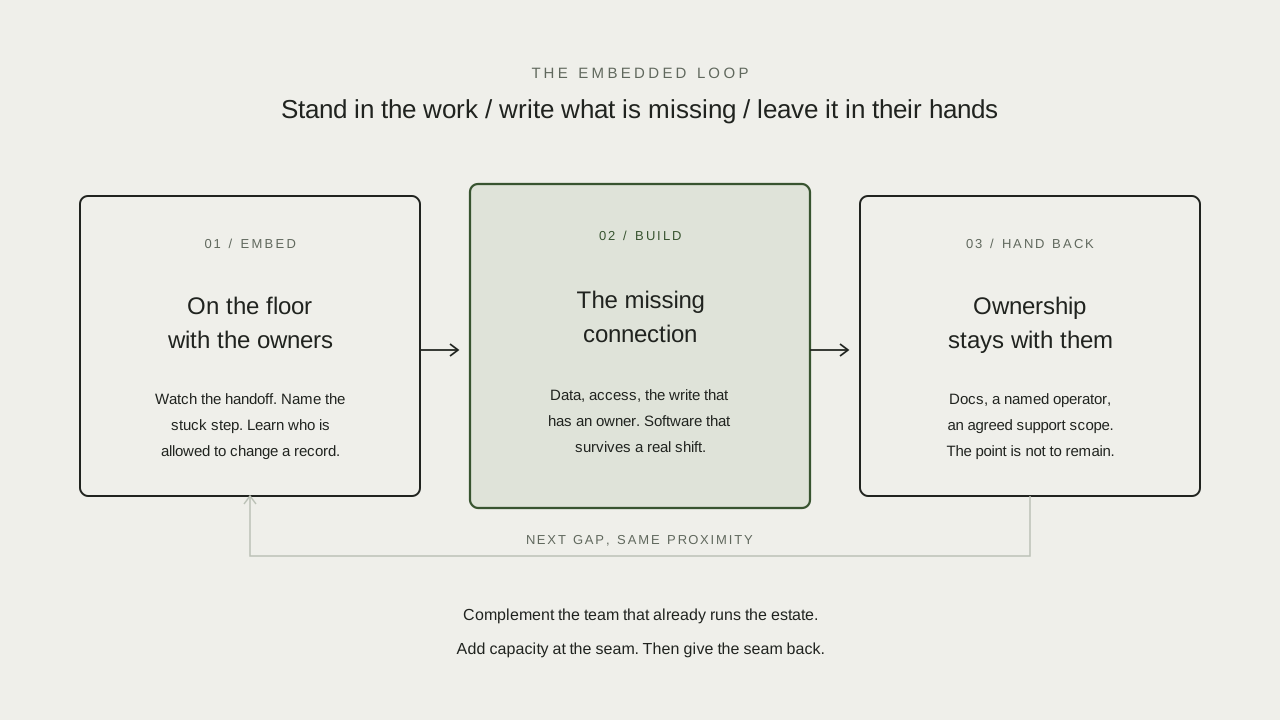
Close enough to see the failure.
You do not learn an operation from a workshop. You learn it from the double entry, the radio call, the spreadsheet that exists only because two records will not speak. From the person who has been covering the gap long enough that the gap has a nickname.
We embed. We stay with the work until the stuck step has a name. We structure data and access so a write has an owner. We build. We put the change in the systems people already use, on a shift that is not a rehearsal — then hand it back.
The complement is the whole point. Architects, operators, internal engineers keep the estate. Extra hands arrive at the seam and leave the seam explainable. Documentation is not a courtesy at the end. If only the visiting engineer can operate the result, the engagement is unfinished.
There is no packaged map, no cutover product, no incident theatre. The sequence is the one the floor already understands: observe, understand, structure, build, deploy. Ownership stays with the people who run the shift.
Work that is still open.
Some days the seam is industrial systems integration — a legacy application, a historian, equipment data that never reaches the people who could use it, middleware nobody wanted to own. A record that should move, and a hidden manual step that still does.
Some days it is an AI task that has to become a job: approved sources, a reviewer, a rule for when an answer is not an action. The notebook was never the destination. Production is a workflow with a person at the steps that need judgement.
Some days it is a stalled integration, an unfinished application, a pilot that never survived a real morning. Rescue is not a slogan. It is sitting with what exists — interfaces, permissions, the intended path — and deciding what can still be true.
Some days it is the operational path that still lives in email. Freight. Plant. Back office. The exceptions known only to the person who has been covering them. Automation here is not a dashboard. It is a quieter morning, with the edge cases still visible.
If that is your hour, write. Bring the systems and the gap. We will say whether the next step is ours.
READ NEXT / GUIDES & ESSAYS
Field notes.
Longer writing from the same floor. Capabilities, a role, two practical guides — the parts of the work that need more than a scene.
The role behind the title: an engineer inside the customer’s operation, writing what a demo cannot, then leaving the path with the people who already own the shift.
When a model has to live inside industrial operations — approved data, a reviewer at the step that needs judgement, a write that is allowed to fail in public.
AI integration with legacy systems starts as inventory: interfaces, permissions, translation, and the person who reconciles a half-finished write.
What “ready” means after the notebook: hard examples, approved sources, a human review that is actually usable, a named owner.
Legacy applications, equipment data, the middleware nobody wanted to own — industrial systems integration as the work of making a record move.
THE STUCK HOUR
Bring the systems and the gap.
Tell us which records refuse to meet, which workflow still ends in an inbox, what already exists — including a path that failed. We use that to respond. Not to invent a programme you did not ask for.
We’ll use these details to respond to your enquiry.