GUIDE / FORWARD-DEPLOYED ENGINEERING
What is a Forward Deployed Engineer?
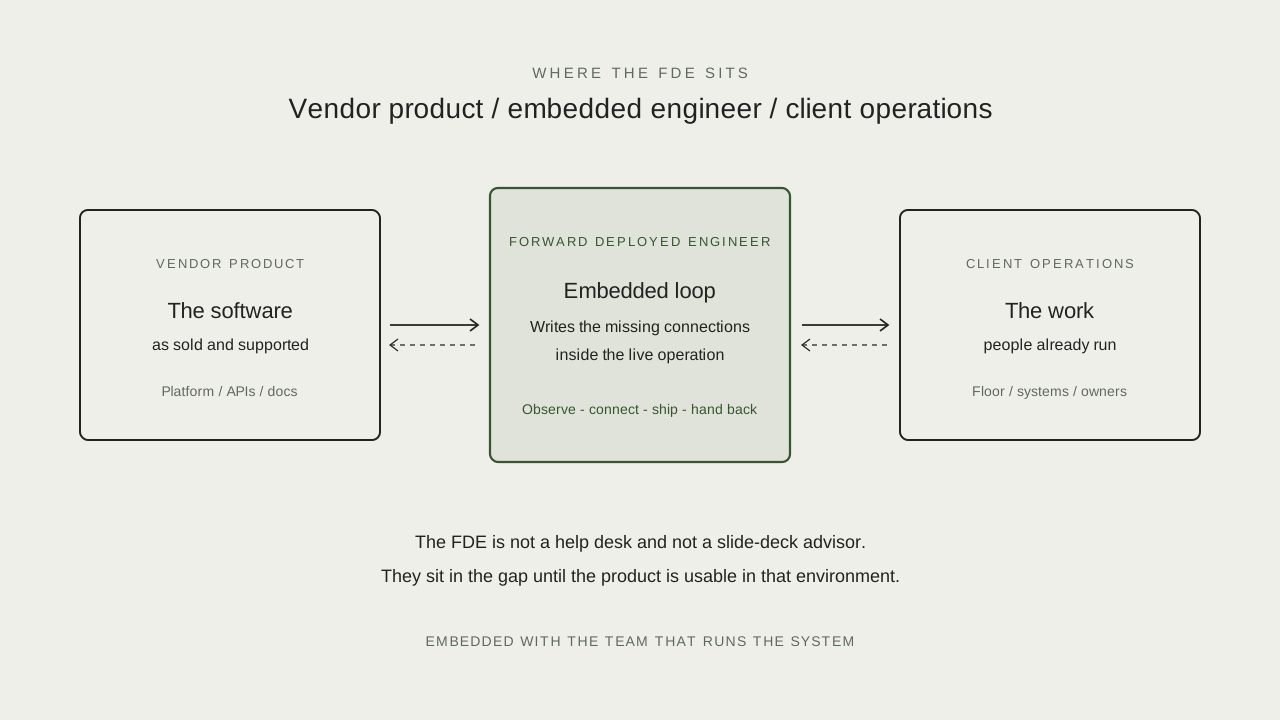
A Forward Deployed Engineer (FDE) is a software engineer who works inside the customer’s operation to make a product, integration, or AI prototype actually run. They sit between the vendor stack and the people who use it: they learn the workflow, write the missing connections, and ship under the constraints of a live environment.
11 min read
A clear definition
Most software is designed somewhere else and dropped into a workplace that already has systems, owners, and habits. An FDE’s job is to close that gap. They are close enough to the operation to see why a demo failed, and technical enough to change the integration, the data path, or the application around it.
The useful test is simple. If the work ends when the slides are accepted, it is not forward deployment. If someone is still writing and shipping software in the customer’s environment — with access rules, change windows, and a named owner — that is the FDE role.
The title is sometimes written “forward deployed,” “forward-deployed,” or shortened to FDE. The spelling varies. The work does not: embed, integrate, put a path into production, and leave the team able to run it.
Why the role is trending now
The title became widely known at Palantir, where Forward Deployed Engineers sat with customers to make the platform useful in that environment. Lavinium is not Palantir. What spread is the pattern: enterprise software, and now AI products, often need an engineer who can live in the customer’s stack long enough to get past the pilot.
Two pressures made the title travel. First, AI products can look convincing on selected examples and still fail when they meet permissions, stale data, and a reviewer who has a real job to finish. Second, industrial and operations teams already run CRM, ERP, historians, warehouse tools, and home-grown applications that do not share a clean interface. Buying another platform does not remove that glue work.
Labs and startups now hire FDEs for the same reason large vendors did: the bottleneck is rarely the model or the product brochure. It is deployment into an operation that cannot pause while someone “figures out the integration later.”
How an FDE differs from nearby roles
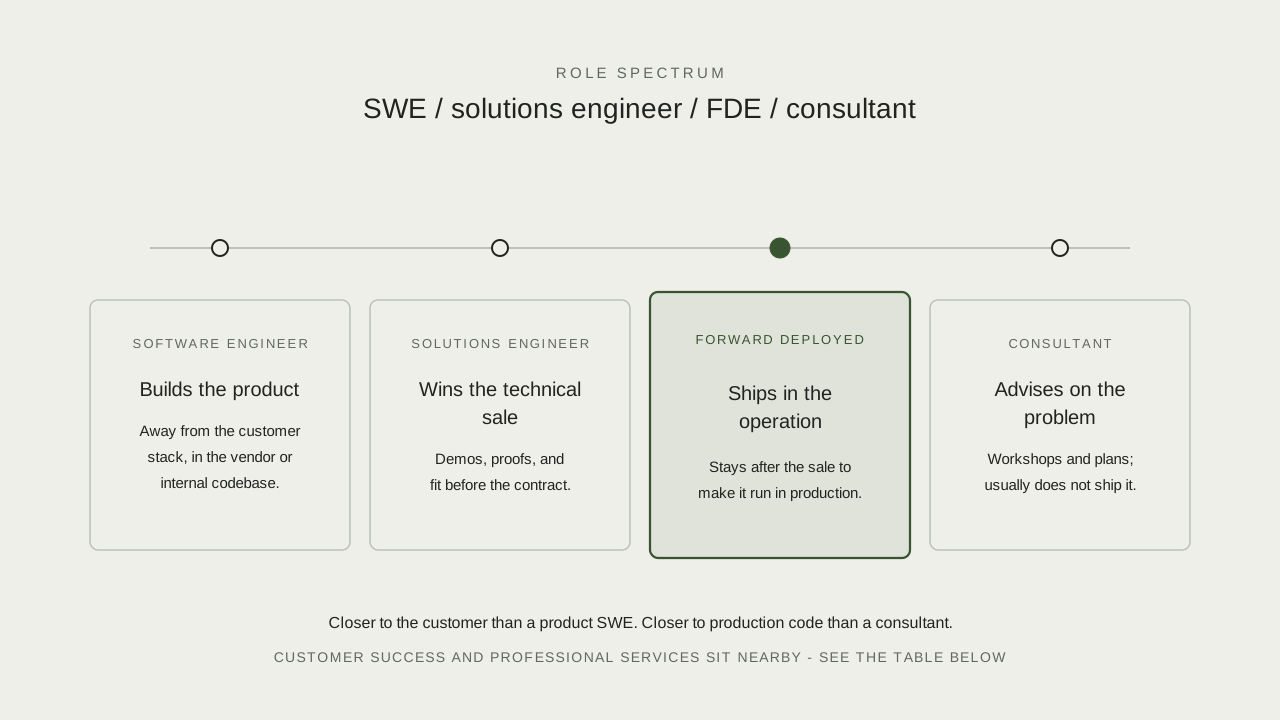
Adjacent titles overlap in conversation and diverge in the work. A board-level distinction is who stays, what they ship, and whether they are measured on a working path in production.
| Role | Typical centre of gravity | What “done” usually means | Where an FDE differs |
|---|---|---|---|
| Traditional software engineer | The product or internal codebase | A shipped feature in the vendor or platform stack | An FDE ships in the customer’s environment, under that team’s constraints |
| Solutions engineer | The technical sale | A demo, proof, or agreed fit before contract | An FDE stays after the sale and does not stop at a successful demonstration |
| Customer success engineer | Adoption, training, and tickets | The customer is using the product as configured | An FDE writes the missing integration when configuration is not enough |
| Consultant | Advice, workshops, and a recommended plan | A decision, roadmap, or assessment | An FDE is measured on working software in the operation, not the deck |
| Professional services | A scoped delivery package | Handover of a defined project | An FDE embeds, iterates with operators, and orients the work to ownership — not a fixed package name |
None of these roles is a lesser version of the others. They solve different problems. Confusion starts when a buyer needs production glue and is offered a workshop, a demo, or a ticket queue instead.
What the work looks like
A useful picture of the role is not a generic “full-stack ninja.” It is a day spent in someone else’s operation, with incomplete documentation and a workflow that already has owners. The following scenarios are illustrative. They are not named client deployments.
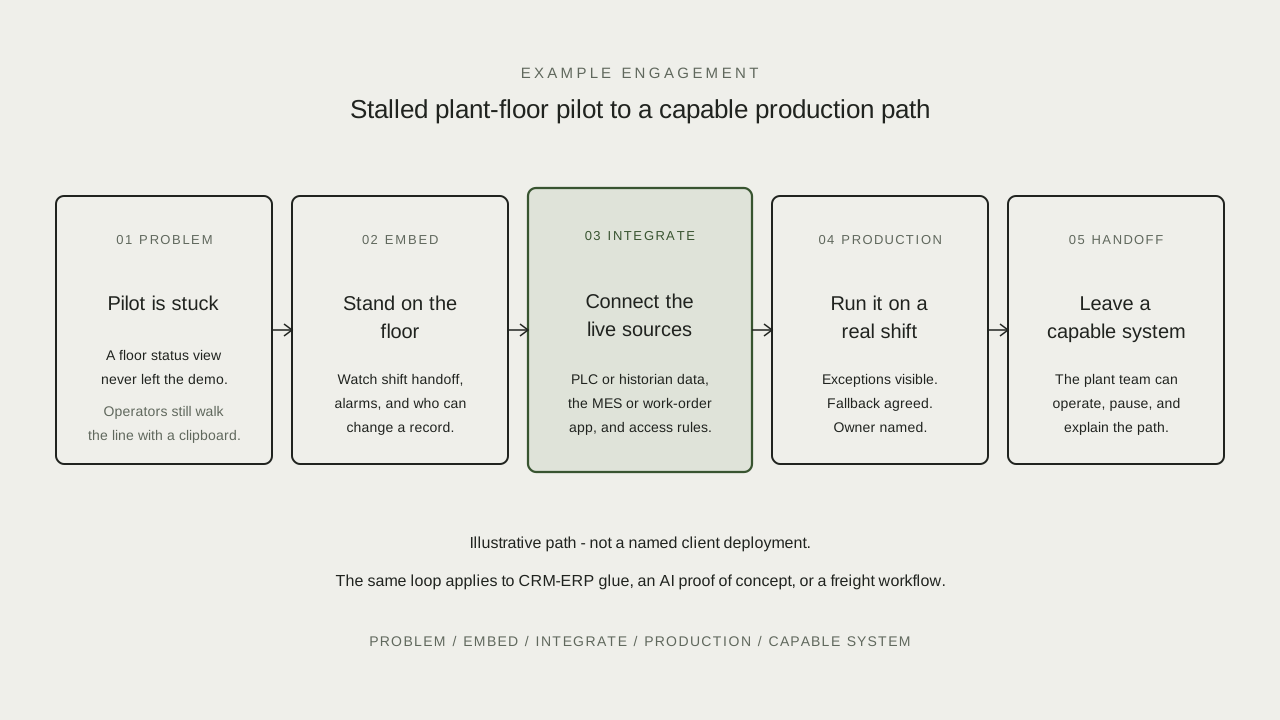
A plant-floor system stuck after a failed pilot
Operations wanted a live status view. A vendor or internal pilot ran on a laptop during a visit. It never connected to the historian or the work-order application under real shift conditions. Operators still walk the line with a clipboard. An FDE stands on the floor, watches handoff and alarms, and asks who is allowed to change a record. The work is to connect the sources that exist, make exceptions visible, and run the path on a real shift before calling it production.
CRM and ERP records that do not agree
Sales updates a customer or order in the CRM. Fulfilment and finance live in the ERP. Someone copies fields between them, or a brittle nightly job overwrites the wrong status. The FDE maps which system owns each field, what the APIs or exports actually allow, and how a failed write should surface. The result is a traceable transfer — not another spreadsheet that only one person understands.
An AI proof of concept that never reaches production
A model summarises documents or drafts a recommendation in a notebook. It has not been given approved data, a reviewer interface, or a rule for what happens when the source is stale. An FDE treats the model as one step in a workflow: define the task, connect the sources the team is allowed to use, put a person at the steps that need judgement, and test the full path. See taking an AI proof of concept to production for the readiness questions, and AI and LLM integration for how Lavinium scopes that work.
A freight or operations workflow that still runs on email
A dispatcher or planner moves bookings, exceptions, and confirmations through inboxes and shared files. The “system” is a person who remembers the edge cases. An FDE sits with that person, writes down the exceptions, and automates the repeatable path while leaving a visible route for the cases that should not be forced through. The success test is a quieter morning, not a new dashboard nobody opens.
Skills and traits that matter
The role is technical. It is also a discipline of attention. The traits that show up in the work are rarely a certification list.
- Production engineering. APIs, data translation, identity, failure handling, and the ability to debug a path that spans more than one system.
- Domain immersion. Willingness to learn the vocabulary of the floor, the yard, or the back office, and to sit with the people who already own the workflow.
- Shipping under client constraints. Change windows, partial access, vendor-managed systems, and incomplete docs are inputs — not reasons to wait for a perfect environment.
- Clear boundaries. Knowing when a model, a rule, or a human review belongs in the path. Not every gap needs AI. Some need a reliable field mapping. Integrating AI with legacy systems starts from that inventory.
- Handover as part of the build. If only the visiting engineer can operate the result, the engagement is unfinished.
When companies use an FDE
Teams hire or borrow an FDE when they need a production path faster than they can stand up a full internal programme for that gap. Typical cases: a vendor product that is licensed but not operational; two systems that should share a record and do not; a prototype that must become a controlled workflow.
The FDE is a complement, not a shadow IT department. Your architects, operators, and engineers remain the owners. The visiting engineer adds capacity at the point where product, data, and daily work refuse to meet.
When a full internal team is the better fit
If the work is a standing product you intend to evolve for years, you still need internal ownership. An FDE can open the first production path and document it. They should not become the only person who understands the system.
If the need is strategy without implementation, a consultant may be enough. If the need is a demo for a buying decision, a solutions engineer may be enough. Use an FDE when the next honest step is software in the environment you already run.
Where Lavinium fits
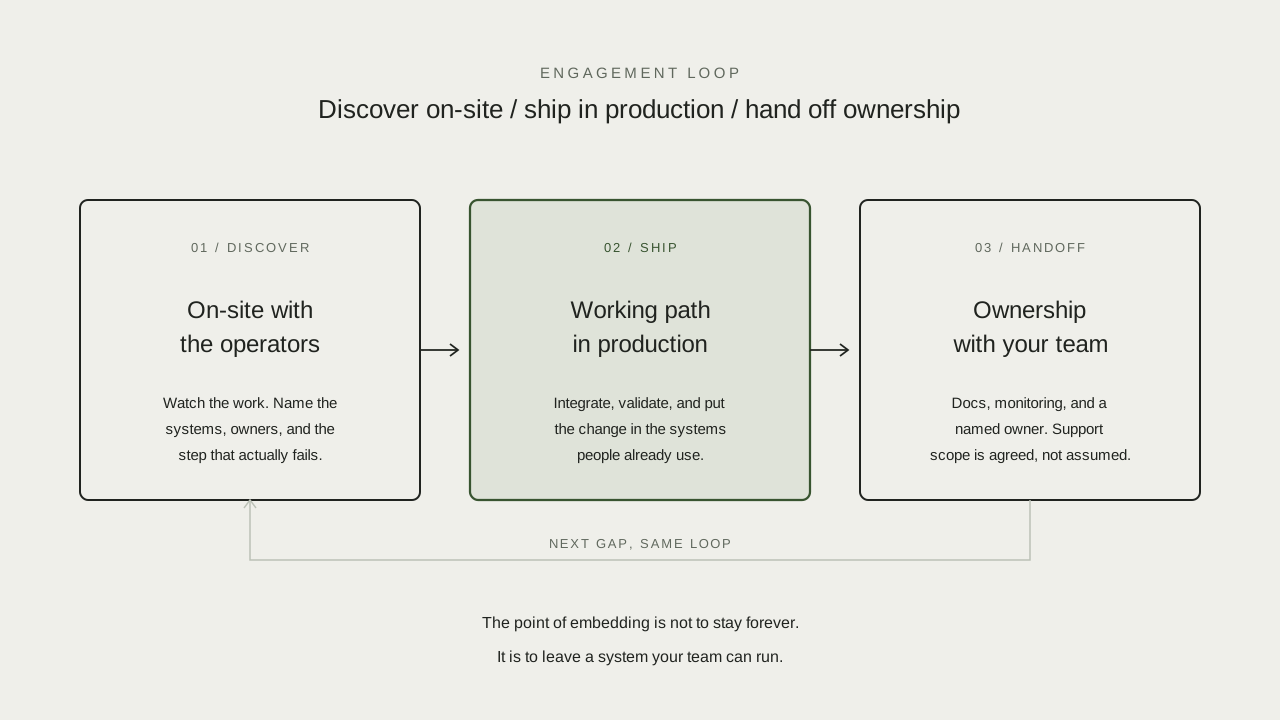
Lavinium is a forward-deployed engineering practice for industrial and operations software. We embed with the team that already runs the work. We connect the systems they depend on, and we build the missing software around those systems — then deploy alongside them.
That usually looks like one of these jobs, not a branded package:
- Rescue a stalled integration or an unfinished application that never reached daily use.
- Connect CRM, ERP, APIs, and legacy applications so a record can move without a hidden manual step.
- Take an AI prototype into a defined workflow, with evaluation, access, and review. Explore AI and LLM integration.
- Automate an operational path — plant, freight, or back office — where the exceptions are known to the people doing the work.
We do not sell incident-response retainers or data-recovery theatre. We do not rename the work as a three-step product line. The approach is the one already on this site: observe the operation, understand the friction, structure data and access, build, and deploy with your team. Systems integration is the capability page for legacy, equipment data, and middleware. Home describes the same deployment model.
If you are evaluating whether an FDE is the right shape of help, bring the systems, the stuck workflow, and whatever already exists — including a failed path. We will say whether the next step is an assessment, an integration, or work your team should keep.
BEFORE WE GET TO WORK
A few answers.
What does FDE stand for?
FDE stands for Forward Deployed Engineer. It is a software engineer who works inside the customer’s operation — not only at a vendor desk — to make a product or integration run in production.
Where did the Forward Deployed Engineer role come from?
The title became widely known at Palantir, where engineers sat with customers to make the platform useful in that environment. Lavinium is not Palantir. Labs, startups, and industrial software teams now use the same idea: someone who can write production code and stay close to the operation long enough to get the work adopted.
How is a Forward Deployed Engineer different from a solutions engineer?
A solutions engineer usually supports the technical sale: demos, proofs, and fit before a contract. An FDE stays after the sale. They write the missing connections, work under the customer’s access and change rules, and do not stop at a successful demonstration.
Do we need an FDE if we already have software engineers?
Internal engineers often own the product or the estate. An FDE is useful when the gap is between a vendor product, two existing systems, or an AI prototype and the people who must run it every day. The work is complementary: extra hands that ship under client constraints, then leave ownership with your team.
Can an FDE work with a failed AI pilot or a stalled integration?
That is a common reason to embed. The first job is to assess the intended workflow, the interfaces that actually exist, and what can be retained. A stalled pilot does not automatically become a production system; the scope is defined after that assessment.
Does a forward-deployed engagement replace our internal team?
No. The useful outcome is a system your people can operate, pause, and explain. Documentation, handover, and an agreed support scope are part of the work — not an optional extra.
How do we start a conversation with Lavinium?
Describe the systems involved, the workflow that gets stuck, and whether you already have a prototype or a failed path. Write to contact@lavinium.io or use the form on this page. We agree on scope and access before defining a deployment.
KEEP READING
Related capabilities and guides.
How to integrate AI with legacy systems ↗
START WITH THE STUCK WORKFLOW
Bring the systems and the gap.
Tell us which systems are involved, what your team is trying to finish, and where the path stops. If a pilot already exists, say what it does today and what remains manual. We use that to respond — not to invent a programme you did not ask for.
We’ll use these details to respond to your enquiry.