CAPABILITY / AI & LLM INTEGRATION
Connect AI to the systems your operation runs on.
Lavinium works alongside your team to bring AI into existing applications and day-to-day workflows. We connect the data, interfaces, and operational steps around the model, with evaluation, clear boundaries, and a path to production your team can own.
4 min read
Close the gaps in everyday work
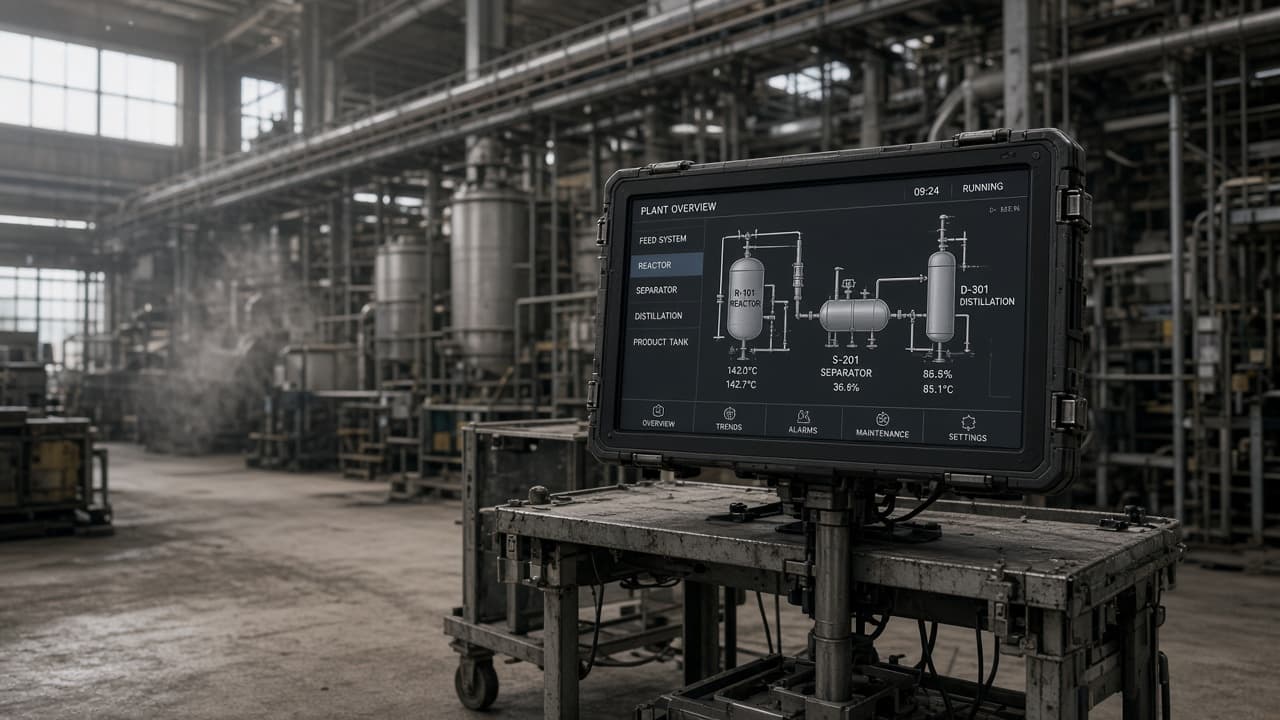
Your team may be connecting AI to an existing application, improving a workflow that still relies on manual transfers, or taking a stalled implementation into daily use. The starting point is the work people need to complete and the systems they depend on.
For an unreliable or unfinished implementation, we assess the model behavior, data, interfaces, and application around it before defining what can be retained and what needs to change. For a new integration, we establish those requirements from the start.
The aim is to reduce unnecessary handoffs, make information more useful, and give your team a clearer way to complete the work. We agree on the outcomes to evaluate for your workflow; any time or cost savings need to be measured in that context.
Build around the systems you already use
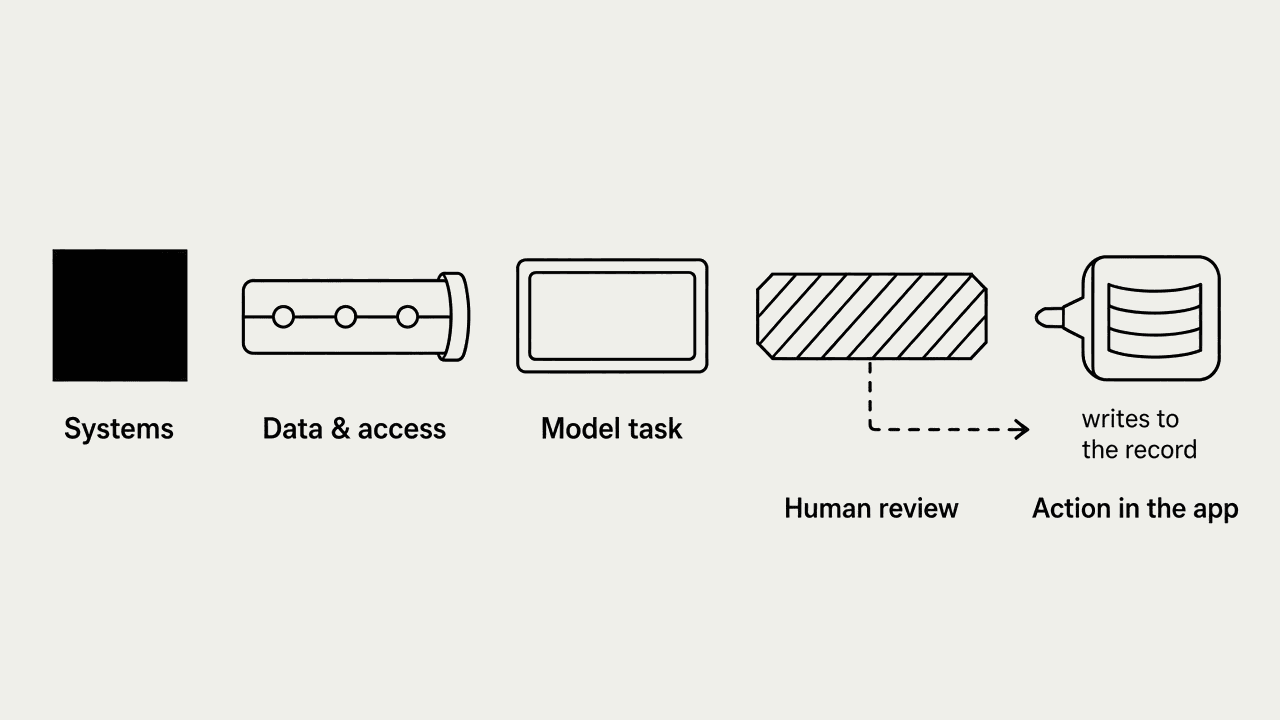
We assess the APIs, databases, exports, and permissions available in your environment. Then we define the connections needed for a specific workflow, including how information is retrieved, transformed, checked, and presented to the people doing the work.
When an existing interface is insufficient, the scope can include custom middleware or an internal application. Integration choices depend on the access and constraints of the systems involved.
Explore systems integration ↗Give AI a defined job
A useful AI task has a clear input, an expected result, and limits on what it can do. We work with your team to define those boundaries and evaluate behavior against representative examples.
A model might help organize unstructured information or prepare a recommendation for review. Application rules and permissions determine which actions are allowed. Human review belongs at the steps where the consequences require it.
Define what will be delivered
Depending on the agreed scope, the work can include:
- A workflow and interface map, including data owners and access requirements.
- Connections between the model, approved data sources, and existing applications.
- Evaluation examples and agreed acceptance criteria for the AI task.
- Validation, review steps, and visible handling of integration failures.
- Deployment configuration, monitoring, and operational documentation.
- Handover to your team and a defined support scope.
We agree on the deliverables, dependencies, and acceptance criteria before committing to implementation. Timing and cost depend on that scope.
Engineering alongside your team
We observe how the work happens, identify the missing connections, structure the data and access, and build and deploy alongside the people responsible for the operation. Forward-deployed engineering describes how we work with you.
Documentation and handover are part of making the delivered capability usable beyond the initial deployment.
BEFORE WE GET TO WORK
A few answers.
Can you integrate AI with a legacy application?
We assess the interfaces, data access, and operating constraints first. An API, database connection, or export may provide a suitable route. Where access is limited, we explain what that means for the proposed workflow before defining the build.
Do we need to replace our existing systems?
We begin with the systems your team uses. The approach depends on their capabilities and constraints; replacement is not assumed.
Can you work with an unfinished or unreliable AI implementation?
Yes. We can assess the intended workflow and the implementation available to your team. Source access, documentation, permissions, and existing dependencies shape what can be done. We define the work after that assessment rather than assuming every build can be repaired.
Does every workflow need an AI model?
No. Some steps are better handled by application rules or a straightforward integration. We use AI where it fits the task.
PRACTICAL GUIDES
Plan the path into production.
What is a Forward Deployed Engineer (FDE)? ↗
WHAT NEEDS TO CONNECT?
Start with the systems and the gap.
Tell us which systems are involved, what your team is trying to do, and where the workflow gets stuck. If you already have a proof of concept, describe what it does today and what remains manual.
We’ll use these details to respond to your enquiry.